
Swisher County Court Calendars Explained
District settings come from the 64th and 242nd District Court sites. Both courts serve Castro, Hale, and Swisher Counties from judicial offices in Plainview. Each page splits its settings by county. The Docket Information views use Swisher County jury-week headings. The sites add date-driven calendars plus hearing-request forms. None of that merges the Swisher County Court, the Justice of the Peace, or the three municipal courts into one feed. The county court posts no standalone calendar. The JP has no docket portal, and Happy publishes no municipal calendar. Tulia and Kress have court information pages but nothing that pulls settings together. So the court level determines which calendar you need. A date for one court tells you nothing about another court's schedule. Even cases that arose in the same county can sit on different schedules.
| Court | Date source | Best confirmation |
|---|---|---|
| 64th District | Calendar and Docket Information | 64th coordinator or clerk |
| 242nd District | Calendar and Docket Information | 242nd coordinator or clerk |
| County Court | No standalone calendar located | Combined County Clerk |
| JP or municipal | Citation and local court page | Issuing court |
Swisher Calendar Access Has Limits
The Texas Judicial Branch treats judicial records and judicial administration information differently from an ordinary Texas Public Information Act request. A setting can be public even when parts of a case file are sealed, confidential, or limited to certain roles. The reverse holds too. An index entry does not promise the next hearing is current online. The Judicial Branch Open Records Policy explains how Swisher County court calendar access works.
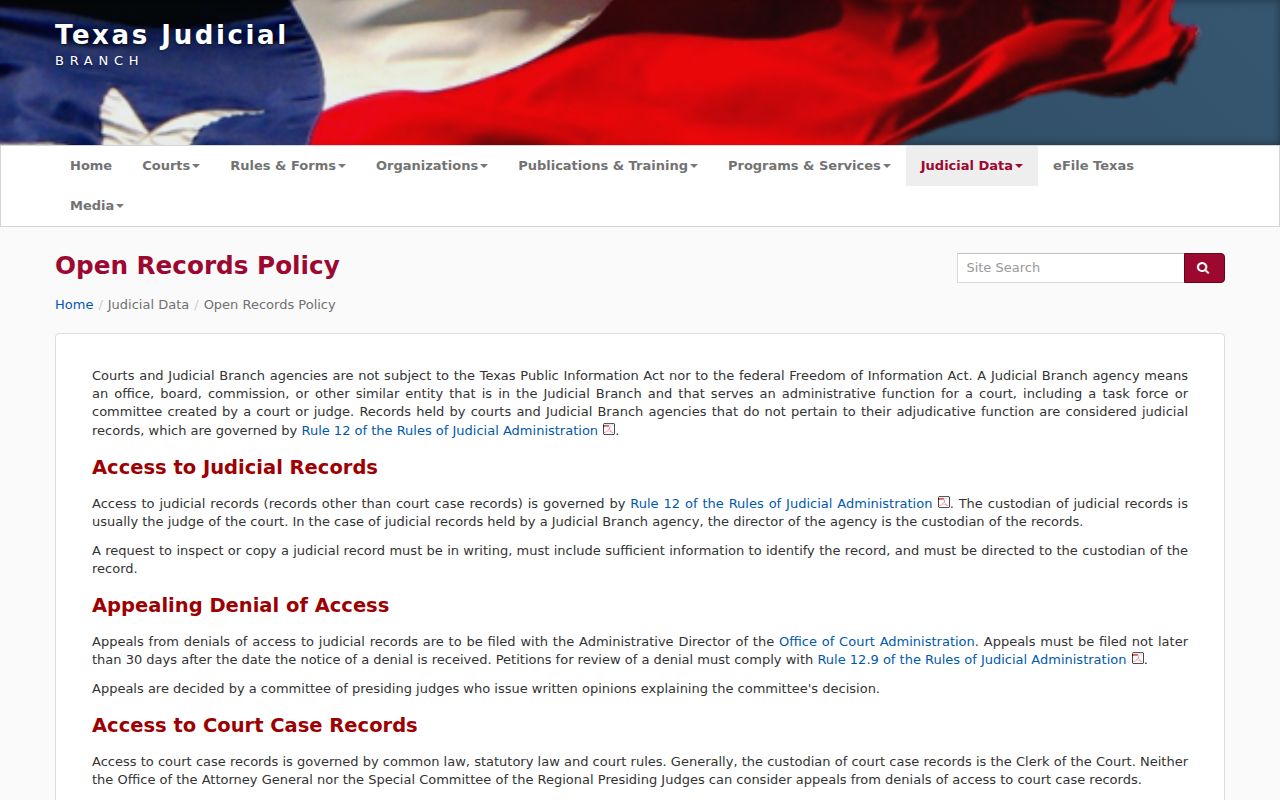
Under that policy, a requester goes to the proper judicial custodian. For a case setting, use the court calendar, the coordinator, and the clerk's process. Skip the broad chapter 552 request when the local clerk routes judicial-record questions through its own form.
Finding Your Swisher Court Date
No single channel is complete, so use them all. Start with the signed notice, citation, or order. For a district matter, open the 64th or 242nd calendar and county docket, and bring a cause number if you have one. A county case belongs to the combined clerk at 806-995-3294. The Swisher Justice of the Peace answers at 806-995-4407. For municipal courts, call Tulia at 806-995-3547, Kress at 806-684-2525, or Happy at 806-558-2121.
- Read the court name, cause number, date, time, and place on the newest signed notice.
- Check the matching district calendar or docket page, if one exists for that court.
- Use iDocket or re:SearchTX as a cross-check, subject to login, category, and role limits.
- Call the responsible clerk or coordinator and ask whether the setting is active.
- Check courthouse or courtroom postings on arrival and follow the court’s current instruction.
An attorney of record can also confirm a client's setting. The county prints no daily countywide calendar, so a lobby sheet may not cover every court. The Swisher County case lookup can help you find a cause number before you call.
Swisher Justice Court Date Route
The Swisher County Justice of the Peace is countywide. It sits at 310 W Broadway in Tulia and handles assigned Class C matters and justice-court civil cases. A county or JP citation is not the same as a Tulia, Kress, or Happy municipal citation. The ticket names the issuing agency and court. That is where you confirm your date. The official Swisher JP page lists the office phone, fax, address, and payment route. It posts no live JP calendar. Paying a fine does not settle every scheduling question either. Read the citation. Call the court. Ask whether a plea, appearance, or hearing is set before you act.
How to Read a Court Setting
Any Swisher County court setting should answer five questions. Ask when, where, which court or judge, what type of event, and which cause number. The public district docket tables list cause number, case style, and attorneys. All of it sits under a county and jury-week heading. Hearing-request forms go further. They add date, time, duration, requester, attorney, case number, style, and type.
| Date | The scheduled calendar day, subject to later court action. |
|---|---|
| Time | The time shown for the event or docket call; arrive as the court directs. |
| Courtroom | The location tied to the court and county, which should be confirmed before travel. |
| Judge or Court | The 64th, 242nd, County Court, JP, or municipal court responsible for the setting. |
| Setting Type | A hearing, plea, pretrial, trial, jury week, or another event, not the final result. |
A requested date is not an accepted date. A blank form submission or a calendar suggestion is never a court order.
Swisher Court Activity Context
The Texas Office of Court Administration runs a Court Activity Database covering district and county reports from September 2010 forward, plus justice and municipal reports from September 2011 forward. Reports group activity by court and fiscal period. They will not reveal any individual's next setting. The OCA Court Activity Database provides this Swisher County court calendar context.
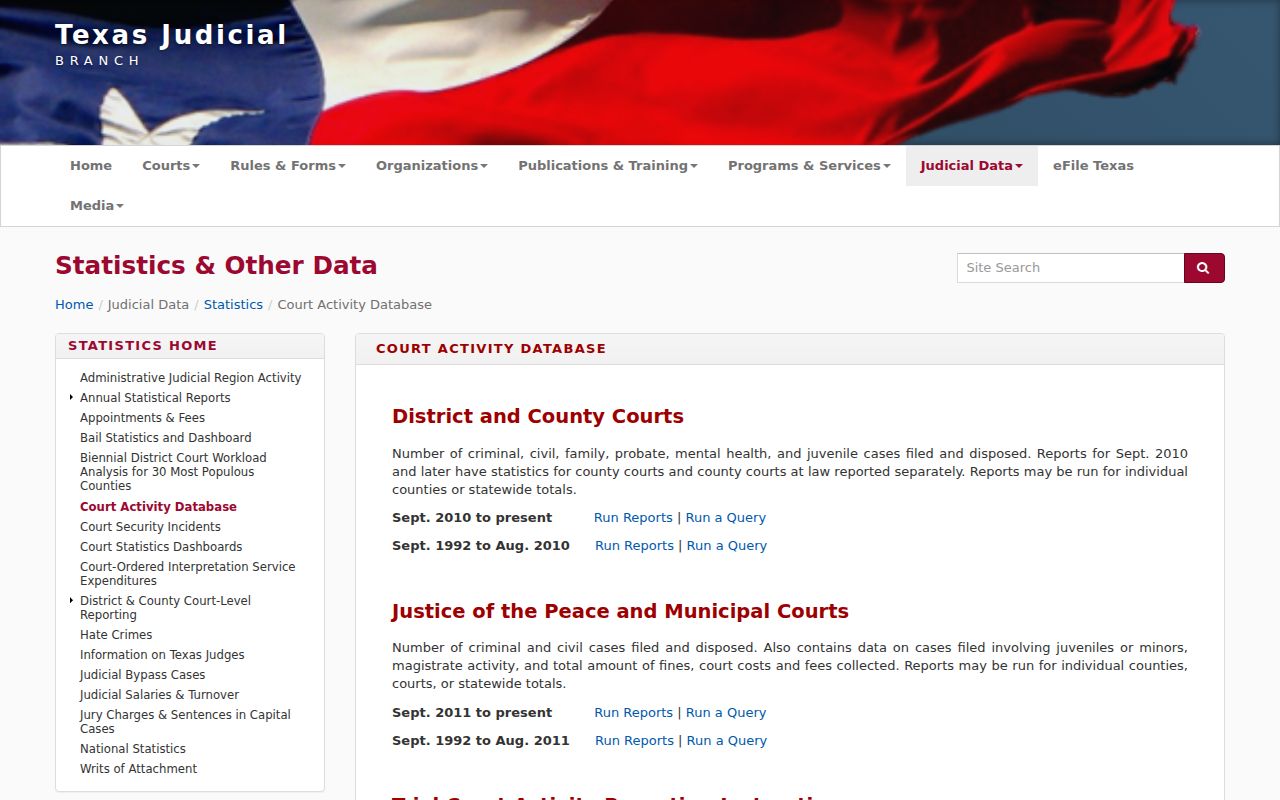
Categories like added, disposed, inactive, and active pending are counts, not dates, convictions, or unique people. Use the database for workload trends. Ask the issuing court for an actual setting.
Continuances, Resets, and Cancellations
A continuance moves a matter under court authority. A reset places it on a different setting. A cancellation or removal can make a row vanish or show up struck through. The 64th and 242nd docket pages both use struck rows. Neither publishes a legend explaining every strike. So do not assume a struck row means the case was dismissed. When a Swisher County court date changes, the signed court notice or current confirmation from the clerk and coordinator beats an older web view. Check again the day before you travel. If the web date conflicts with a newer signed notice, call the court named on both. Ask for the active date, time, courtroom, setting type, and cause number. Keep the notice, and write down whom you spoke with.
- Reset
- A new setting that replaces or follows an earlier setting.
- Continuance
- A court-approved delay to a later date.
- Jury week
- A county-labeled trial period, not proof that a trial will occur.
- Struck row
- A visual cue that needs direct court interpretation.
Swisher Has No Unified Calendar
Swisher County does not run one master calendar. Work the phones by case type instead. District court coordinators set hearings for their courts. The combined County & District Clerk keeps the official county and district record. The Justice of the Peace keeps its own docket. The Tulia, Happy, and Kress municipal courts each handle city matters apart from the county. Federal cases belong to the Northern District of Texas, Amarillo Division. They never appear on a Swisher docket.
Reach the 64th coordinator through 64thcourt.com and the 242nd through 242ndcourt.com. Both sites list contact details and calendar tools. Got a municipal ticket? Call the number on the citation before trying any county office. A Texas Highway Patrol citation from the preceding 24 months can also be traced through the official DPS search. Fill in every required identity field, and it returns the court contact. No standing Zoom or livestream link exists for Swisher settings. Confirm remote attendance for each one.
Note: check every setting with the court that issued it. No shared calendar pulls these offices together.
If You Miss a Court Setting
Missed a hearing in Swisher County? Reach the court or your lawyer right away. Give them the court name, your cause or citation number, the date you missed, and how to reach you. Then two questions matter. Is a new court date already set? What step does the court require to make it official? Paying through some unrelated portal fixes nothing. Nor does showing up at a different clerk's counter just because it carries the county name.
Missed a setting? A missed appearance can have serious case consequences, including a failure-to-appear action or warrant where law and the court allow.
Call the issuing court promptly and get current instructions; only that court can state the status and next authorized step.
Legal advice about a missed Swisher County setting should come from a licensed attorney, not from a calendar entry.
Tulia's official warrant page carries a plain warning. The list is not updated daily, and a name on it proves neither guilt nor a current balance owed. That caution applies to every Swisher County court-date search: confirm live status with the court that issued the entry.
Swisher Hearing Request Fields
Both the 64th and 242nd request forms ask for the same basics. You supply a proposed event date and time, plus how long it should run. The forms also want your name and email, the attorneys on each side, the case number, the style, and the event type. Coordinators use those fields to weigh a request. Filling them out does not amend any prior order. It does not put the matter on a confirmed docket either.
| Source | What it can show | What it cannot prove |
|---|---|---|
| Calendar | Date-based public event view | Complete file or final outcome |
| Docket row | County, jury week, cause, style, attorneys | Reason for every struck row |
| Request form | Details proposed for scheduling | Acceptance or confirmation |
| Signed notice | Court’s formal setting instruction | Later changes not yet served |
The reliable chain runs notice, live calendar, coordinator, then clerk. Once the court date is confirmed, anyone who needs the deeper case file can use the Swisher County court record search and its request process.